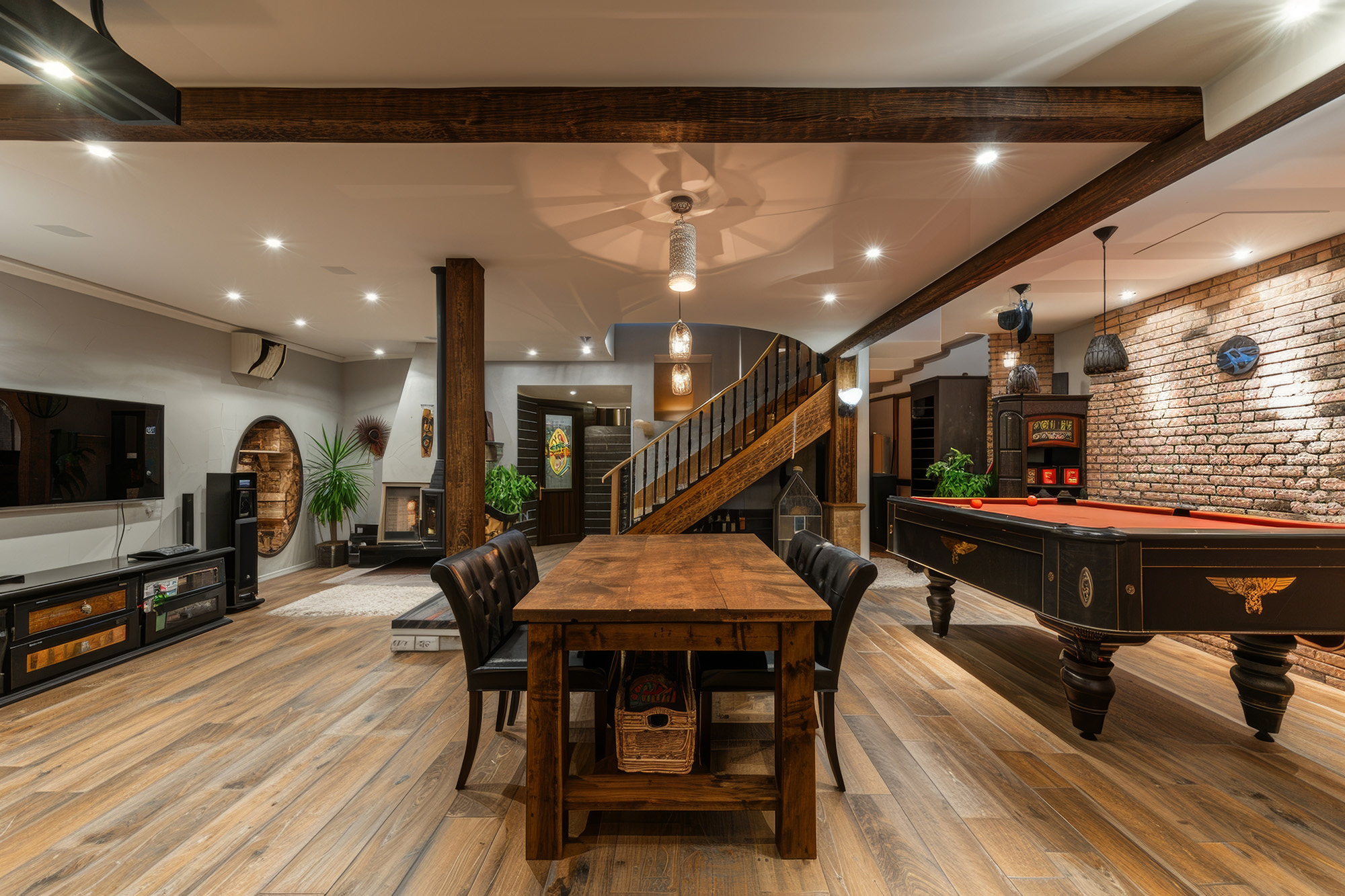
In many Vermont homes, the basement represents an opportunity that has not yet been fully explored. It may currently serve as a laundry area, storage room, workshop, or place for seasonal equipment. With thoughtful planning, however, a basement can become a more useful extension of the home: a family room, home office, exercise area, guest space, or entertainment room.
One of the most important decisions in transforming a basement is selecting the right flooring. Unlike an above-grade living room, a basement may have a concrete slab, limited natural light, and a greater need for careful moisture evaluation. The floor must suit these conditions while helping the space feel comfortable and connected to the rest of the home.
Luxury vinyl is an option worth considering for certain basement projects. Available in wood-inspired planks and stone-inspired tile designs, it can provide a finished appearance without relying on natural wood. However, selecting the right product requires more than choosing a waterproof label or attractive color. The condition of the basement and the manufacturer's installation requirements should guide the decision.
Start With the Basement, Not the Flooring Sample
Before choosing a floor, evaluate the basement itself. Is the concrete slab dry? Has the space experienced water intrusion? Are there signs of condensation, musty odors, or discoloration along the walls? Does the basement have an appropriate heating and ventilation arrangement?
These questions matter because flooring cannot solve an underlying moisture problem. Even a product marketed as waterproof may be unsuitable if water is entering the basement through the foundation or accumulating beneath the flooring system.
Concrete can transmit moisture, and conditions may change throughout the year. A slab that appears dry during one season may require further evaluation before flooring is installed. Appropriate moisture testing should be completed according to the requirements of the selected product.
Any leaks, drainage problems, or signs of water intrusion should be addressed before the renovation proceeds. Homeowners should also investigate persistent odors or visible moisture rather than covering them with a new floor.
Once the basement conditions have been assessed and any necessary repairs completed, the flooring selection can be made with greater confidence.
Why Luxury Vinyl Is Considered for Basement Renovations
Luxury vinyl is available in several constructions, including plank and tile formats. Wood-look products can create a warmer residential appearance, while stone-inspired designs can provide a more contemporary finish.
Many luxury vinyl products are designed to resist moisture, and some are marketed as waterproof. This can make them attractive for basement environments where homeowners want to avoid materials that are more vulnerable to occasional spills. However, waterproof flooring does not make the basement itself waterproof. Water can still enter from the foundation, perimeter, or other building components.
Luxury vinyl also offers design flexibility. A basement that once felt like a purely functional space can be given a more consistent appearance with the rest of the home. Natural oak-inspired planks, warm brown finishes, and understated stone looks can help create an inviting environment.
As with any flooring category, performance varies by product. Homeowners should review the core construction, wear layer, approved installation methods, warranty terms, and moisture limitations before choosing a particular floor.
Choose a Color That Helps a Basement Feel Brighter
Many basements receive less natural light than the main floors of a home. This makes color selection particularly important. A dark floor may create a dramatic appearance, but in a room with limited daylight it can make the space feel more enclosed.
Light and medium wood-inspired tones can help create a brighter atmosphere. Natural oak, warm beige, and soft brown shades are versatile options that can work with a range of wall colors and furnishings.
Warm finishes are also a useful alternative to the cooler gray flooring that has been common in some interiors. They can make a basement feel more like a comfortable living area rather than a separate utility space.
Consider the wall color and lighting plan alongside the floor. Warm white walls, layered lighting, and lighter furniture can help balance the room. If the basement has exposed beams or darker architectural details, a lighter floor may create a useful contrast.
Samples should be viewed in the actual basement because artificial lighting can change the appearance of a flooring color. A product that looks bright in a showroom may appear different in a room with limited windows.
Create Separate Zones Without Breaking Up the Floor
A finished basement often serves several purposes. One section may contain a television and seating area, while another provides space for exercise equipment, a desk, or children's activities. The challenge is creating distinct zones without making the room feel divided.
Using one luxury vinyl style throughout suitable areas can create a continuous visual foundation. Furniture, rugs, lighting, and shelving can then establish separate functions.
A large area rug can define the seating area, while a desk and task lighting can create a practical workspace. Open shelving or a strategically placed sofa can provide a subtle boundary between activities.
This approach is particularly useful in basements where walls and windows are limited. Rather than dividing the room into several small spaces, the flooring can help preserve a sense of openness while the furnishings provide organization.
Where the basement includes a laundry area, bathroom, or utility room, product suitability and transitions should be considered separately. Not every luxury vinyl product is approved for every application, and the manufacturer's instructions should guide the installation plan.
Think About Comfort Underfoot
Basements can feel cooler than upper floors, especially when the flooring is installed over a concrete slab. Luxury vinyl provides a finished surface, but the overall comfort of the room depends on more than the flooring material alone.
Heating, insulation, air circulation, and the condition of the foundation all influence how comfortable a basement feels. Area rugs can provide additional softness in seating and recreation areas, while suitable underlayment may be required for certain flooring products.
However, homeowners should not add an underlayment simply because they want a softer feel. Some luxury vinyl products have attached backing, and others specify which underlayment systems are permitted. Using an unapproved material can affect the performance or warranty of the floor.
If radiant heating is being considered, verify that the selected product is approved for the specific heating system and installation conditions. Temperature limits and other requirements should be followed carefully.
Choose a Floor for the Way the Basement Will Be Used
A basement family room may experience regular foot traffic, furniture movement, toys, and occasional spills. A home office may need a surface that works with desk chairs and equipment. An exercise area may involve heavier objects and repeated movement.
These different uses should influence the product selection. Review the wear-layer information, approved applications, furniture protection guidance, and warranty terms. A floor selected for a quiet guest room may not be the best choice for a busy recreation space.
Furniture pads can help reduce the risk of scratches, while suitable protective mats may be appropriate beneath equipment or rolling chairs. Heavy objects should be placed and moved according to the manufacturer's recommendations.
For basements with pets or children, maintenance requirements also deserve attention. A textured wood-look design may create a welcoming appearance, but regular cleaning and prompt attention to spills remain important.
Plan Transitions Between the Basement and Main Floors
A basement renovation should feel connected to the rest of the home. One way to achieve this is by choosing a luxury vinyl color that relates to the flooring or finishes on the main level.
The basement does not necessarily need to use the exact same floor as the upstairs rooms. It can have its own character while sharing a similar color family or material style. For example, a warm oak-inspired luxury vinyl floor may complement existing hardwood without attempting to imitate it exactly.
Transitions between the basement stairs, landing, and finished floor should be planned carefully. Differences in floor height, stair nosings, and edge details influence both appearance and safety. These details should be resolved before installation begins.
Installation Preparation Is Essential
Luxury vinyl installation depends on a suitable substrate. The concrete slab or other subfloor should be evaluated for flatness, cleanliness, and moisture conditions. Uneven areas may need correction, and contaminants or previous adhesive residues may need to be addressed according to the installation system.
Different luxury vinyl products use different installation methods. Some are designed as floating floors, while others require adhesive or specific preparation materials. The correct approach depends on the product and the manufacturer's instructions.
Basement temperature and humidity conditions should also meet the product requirements. Installation should not begin until the space is suitable and any moisture concerns have been resolved.
Careful preparation helps the finished floor look consistent and perform as intended. It also reduces the likelihood of problems that could be difficult to correct after furniture and finished walls are in place.
Turn an Underused Basement Into a Room You Enjoy
A basement can become one of the most flexible spaces in a home when its design responds to the building's actual conditions. Luxury vinyl offers a range of wood- and stone-inspired styles for homeowners who want a finished appearance and a product suited to the intended room. The most important steps are evaluating moisture, selecting an appropriate construction, and preparing the subfloor correctly.
Explore the luxury vinyl flooring options at Elegant Floors to compare colors, plank styles, and product possibilities. If you are planning to finish or renovate a basement, visit the contact page to discuss your project.
Whether you are transforming a basement in Shelburne, creating a family room in Colchester, planning a home office in South Burlington, or updating a lower-level living space in Charlotte or Williston, the right floor can help make the room feel like a natural extension of your home. With careful preparation and an appropriate product, a previously underused basement can become a comfortable and useful part of everyday life.